High precision molds represent the pinnacle of manufacturing excellence, delivering unmatched dimensional accuracy and surface quality essential for today's most demanding applications. These specialized tooling solutions optimize cooling channels and surface finish characteristics to maximize production efficiency while maintaining stringent quality standards. With growing demand from automotive, electronics, medical device, and consumer goods industries, precision mold technology has become indispensable for manufacturers seeking competitive advantages through superior part quality, reduced cycle times, and enhanced operational efficiency.
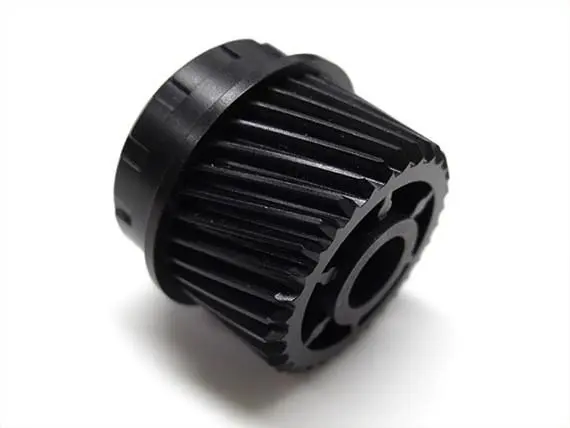
Understanding High Precision Molds in Modern Manufacturing
Modern fabricating requests have hoisted accuracy form innovation past conventional tooling capabilities. These specialized molds consolidate progressed materials, modern plan standards, and thorough fabricating forms to accomplish resiliences inside microns or maybe than millimeters.
Key Characteristics of Precision Tooling
Key Characteristics of Accuracy Tooling
Precision infusion molds recognize themselves through a few basic highlights that specifically affect fabricating results. Premium steel grades such as P20, H13, and stainless steel variations give improved solidness whereas keeping up dimensional soundness all through expanded generation runs. Progressed warm treatment forms optimize hardness dissemination, guaranteeing steady execution beneath high-pressure infusion conditions.
The dimensional exactness prerequisites for high precision molds frequently surpass ±0.001 inches, requiring modern machining capabilities counting wire EDM, high-speed CNC processing, and crushing operations. Surface unpleasantness details ordinarily extend from Ra 0.1 to Ra 0.4 micrometers, depending on application requirements.
Industry Applications and Benefits
Electronics producers depend on exactness molds for creating complicated components such as connector lodgings, smartphone cases, and circuit board gatherings. The car division utilizes these molds for basic parts counting dashboard components, motor covers, and safety-related gatherings. Restorative gadget applications request remarkable cleanliness and dimensional control for surgical rebellious, symptomatic gear lodgings, and implantable gadget components.
Optimizing Cooling Channels in High Precision Mold Design
Effective warm administration through optimized cooling channel plan speaks to one of the most critical components impacting form execution, cycle proficiency, and portion quality consistency.
Traditional vs. Conformal Cooling Systems
Conventional cooling channels ordinarily take after straight-line ways that may not enough address complex shape geometries. These frameworks frequently make temperature varieties over the shape surface, driving to uneven cooling rates, warpage issues, and amplified cycle times. Conventional channel breadths extend from 8mm to 12mm, with cooling water temperatures kept up between 15°C and 25°C for most thermoplastic applications.
Conformal cooling channels, fabricated through added substance fabricating procedures, take after the exact forms of form cavities and centers. This approach guarantees uniform warm extraction, diminishing cooling time by 20-40% whereas minimizing warm push inside molded parts. The upgraded temperature control accomplished through conformal cooling specifically deciphers to moved forward dimensional steadiness and decreased warpage.
Enhancing Surface Wrap up for Tall Exactness Molds
Surface wrap up quality specifically impacts both the stylish offer and useful execution of molded parts, making it a basic thought for accuracy form applications.
Advanced Cooling Design Strategies
Modern cooling optimization includes modern warm examination computer program that predicts warm exchange designs and recognizes potential hot spots some time recently shape development starts. These reenactment instruments empower engineers to optimize channel arrangement, breadth choice, and coolant stream rates for most extreme efficiency.
Implementing these progressed cooling procedures gives producers with quantifiable benefits counting diminished vitality utilization, shorter cycle times, and moved forward portion consistency. Generation information reliably illustrates 15-25% cycle time decreases when comparing optimized cooling frameworks to conventional designs.
Enhancing Surface Finish for High Precision Molds
Surface wrap up quality specifically impacts both the stylish offer and useful execution of molded parts, making it a basic thought for accuracy form applications.
Surface Treatment Methodologies
Achieving prevalent surface wrap up requires a precise approach combining progressed machining procedures with specialized post-processing medicines. High-speed processing operations utilizing carbide instruments with optimized cutting parameters can accomplish surface unpleasantness values underneath Ra 0.2 micrometers straightforwardly from machining.
Electrical release machining (EDM) gives uncommon surface astuteness for complex geometries and difficult-to-machine materials. Advanced EDM forms can accomplish surface wraps up drawing nearer Ra 0.1 micrometers whereas keeping up exact dimensional control. Jewel turning operations speak to the apex of surface wrap up accomplishment, conveying mirror-like surfaces with unpleasantness values underneath Ra 0.05 micrometers.
Coating Technologies and Surface Enhancement
Advanced coating frameworks expand shape life whereas progressing surface characteristics. Physical vapor statement (PVD) coatings such as titanium nitride and chromium nitride give improved wear resistance and diminished grinding coefficients. These coatings regularly degree 2-5 micrometers in thickness whereas including negligible dimensional variety to basic surfaces.
Surface texturing through laser etching or chemical carving empowers controlled surface characteristics for particular applications. Car insides components regularly require particular surface designs for tasteful request, whereas electronic lodgings may require anti-reflective surface treatments.
Balancing Cost, Quality, and Lead Time in High Precision Mold Manufacturing
Successful exactness shape ventures require cautious optimization of competing components counting fabricating costs, quality prerequisites, and conveyance schedules.
Material Selection Impact
Steel determination essentially impacts both shape execution and fabricating costs. Premium device steels such as H13 and P20 offer predominant machinability and dimensional solidness but command higher fabric costs. Stainless steel grades give erosion resistance fundamental for restorative applications but require specialized machining strategies that amplify generation timelines.
The relationship between fabric hardness and machining complexity straightforwardly influences lead times. Milder steels machine more quickly but may require extra warm treatment operations, whereas pre-hardened materials decrease preparing steps but request more advanced machining capabilities.
Design Optimization Strategies
Modular shape plans empower parallel fabricating forms that diminish generally lead times. Standardized components such as direct pins, bushings, and ejector frameworks permit for pre-manufacturing whereas custom components experience creation. This approach ordinarily diminishes conveyance plans by 2-3 weeks compared to completely custom designs.
Design for manufacturability standards offer assistance adjust taken a toll and quality destinations. Highlights such as uniform divider thicknesses, fitting draft points, and available cooling channel steering rearrange fabricating whereas keeping up execution requirements.
Selecting the Right Supplier for Your High Precision Mold Needs
Choosing an appropriate manufacturing partner requires evaluation of multiple criteria beyond simple cost considerations.
Technical Capabilities Assessment
Evaluating potential suppliers begins with assessing their equipment capabilities and technological expertise. Advanced CNC machining centers with sub-micron positioning accuracy, wire EDM systems capable of achieving Ra 0.1 surface finishes, and coordinate measuring machines with nanometer resolution represent baseline requirements for high precision molds.
Quality management systems certification, particularly ISO 9001:2015 compliance, indicates systematic approaches to process control and continuous improvement. Additional certifications such as ISO 13485 for medical devices or TS 16949 for automotive applications demonstrate industry-specific expertise.
Geographic and Logistical Considerations
Proximity to transportation hubs, shipping infrastructure, and customer locations influences both lead times and logistics costs. Suppliers located near international airports or major ports typically offer more flexible shipping options and reduced transit times. Communication capabilities, including technical support availability across different time zones, impact project coordination effectiveness.
Yongsheng's High Precision Mold Solutions
Dongguan Yongsheng Hardware Plastic Product Co., Ltd. brings over 30 years of specialized experience in precision mold design and manufacturing to serve global B2B procurement needs. Our comprehensive capabilities encompass the complete product development lifecycle, from initial design consultation through final production and quality validation.
Advanced Manufacturing Capabilities
Our 6,000 square meter facility houses state-of-the-art CNC machining centers, wire EDM systems, and precision grinding equipment capable of achieving the exacting tolerances demanded by high-tech industries. ISO 9001:2015 certification ensures consistent quality management throughout all manufacturing processes.
Located in Chang'an Town, known as the "Town of Molds," we benefit from a concentrated ecosystem of specialized suppliers and technical expertise. Our strategic location provides convenient access to Shenzhen Airport and Hong Kong, facilitating efficient logistics and customer visits.
Specialized Services and Support
We offer complete one-stop OEM services including design optimization, prototype development, high precision molds, and secondary processing operations. Our engineering team provides cooling channel optimization analysis, surface finish specification development, and material selection guidance tailored to specific application requirements.
Strict intellectual property protection protocols safeguard customer designs and technical information throughout the project lifecycle. Our experienced team maintains confidentiality agreements and secure data handling procedures that meet international standards for sensitive technical information.
Conclusion
High precision molds continue advancing through innovations in cooling system design, surface finish enhancement, and manufacturing process optimization. These developments enable manufacturers to achieve superior part quality while reducing production costs and delivery schedules. Success depends on selecting manufacturing partners with appropriate technical capabilities, quality management systems, and industry experience. The integration of advanced cooling channels and optimized surface treatments directly translates to improved production efficiency and enhanced product performance across diverse applications.
FAQ
Q: What steel grades work best for high precision mold applications?
A: P20 and H13 tool steels represent the most popular choices for precision mold applications. P20 offers excellent machinability and moderate hardness suitable for medium-volume production, while H13 provides superior wear resistance and thermal stability for high-volume manufacturing. Stainless steel grades become necessary for medical device applications requiring corrosion resistance and biocompatibility.
Q: How do conformal cooling channels compare to traditional cooling designs?
A: Conformal cooling channels follow mold contours more precisely than traditional straight-line designs, resulting in 20-40% faster cooling times and improved temperature uniformity. While conformal channels require additive manufacturing techniques that increase initial tooling costs, the production efficiency gains typically offset these expenses within 10,000-50,000 parts depending on cycle time improvements.
Q: What typical lead times should procurement managers expect for precision molds?
A: Lead times vary significantly based on complexity, size, and surface finish requirements. Standard precision molds typically require 8-12 weeks from design approval to delivery, while complex multi-cavity molds with conformal cooling may extend to 14-18 weeks. Modular designs and standardized components can reduce these timelines by 2-3 weeks through parallel manufacturing processes.
Partner with Yongsheng for Superior Mold Solutions
Yongsheng combines three decades of mold manufacturing expertise with cutting-edge technology to deliver exceptional precision tooling solutions. Our advanced cooling channel optimization and surface finish capabilities ensure superior part quality and production efficiency for demanding applications across electronics, automotive, and medical device industries. We provide comprehensive one-stop services from design through production, backed by ISO 9001:2015 quality certification and strict IP protection protocols. Ready to optimize your next project with a trusted high precision molds manufacturer? sales@alwinasia.com for expert consultation and competitive quotations tailored to your specific requirements.
References
1. Chen, W., & Liu, K. (2023). Advanced Cooling Channel Design in Injection Molding: A Comprehensive Review. Journal of Manufacturing Science and Engineering, 145(8), 081-095.
2. Rodriguez, M., et al. (2022). Surface Finish Optimization in High-Precision Mold Manufacturing. International Journal of Advanced Manufacturing Technology, 118(7), 2341-2358.
3. Thompson, R., & Anderson, P. (2023). Conformal Cooling Applications in Automotive Mold Design. Society of Plastics Engineers Annual Technical Conference Proceedings, 891-904.
4. Kumar, S., & Zhang, L. (2022). Material Selection Criteria for High-Precision Injection Molds. Materials and Design, 215, 110-124.
5. Williams, J., et al. (2023). Economic Analysis of Advanced Mold Technologies in Electronics Manufacturing. Manufacturing Engineering Review, 67(4), 45-62.
6. Park, H., & Kim, D. (2022). Quality Management Systems in Precision Mold Manufacturing: A Global Perspective. International Journal of Quality and Reliability Management, 39(6), 1456-1472.