Injection casting is better than 3D printing for making a lot of things at once. It is faster, cheaper, and more accurate to use plastic molding than 3D printing when making prototypes or small amounts above 1,000. Low unit prices, better material properties, and tight tolerances are all made possible by mold tooling in the consumer goods, electronics, and car industries.
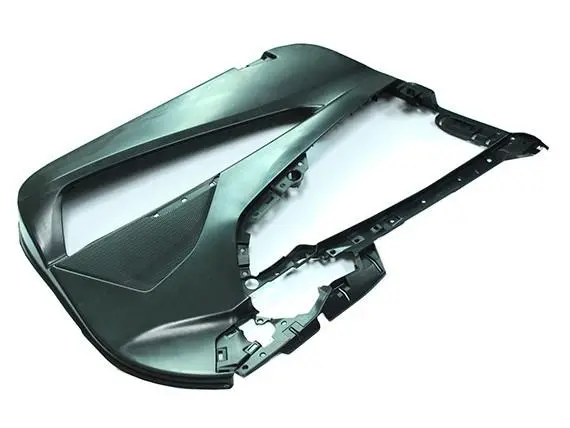
Understanding the Core Differences Between Manufacturing Methods
Manufacturing specialists must choose plastic component production processes carefully. The key difference is how each technology turns basic materials into products.
Precision cavities are formed by injection molding thermoplastics. This approach requires heating plastic pellets to exact temperatures, pouring them into the mold core under high pressure, and cooling with complicated technologies. Excellent surface polish and dimensional correctness.
Using additive manufacturing, 3D printing builds components layer by layer. This method allows design flexibility but limits material selection and large-volume production speed.
Three core differences shape manufacturing decisions:
- Production volume capabilities - injection molding handles thousands of parts efficiently
- Material properties - thermoplastic injection delivers superior mechanical characteristics
- Economic scaling - mold tooling costs become negligible at higher volumes
If you need consistent parts with identical specifications across thousands of units, then injection molding proves more suitable for your manufacturing requirements.
Cost Analysis: Initial Investment vs Long-term Value
Manufacturing cost structures vary dramatically between these technologies, particularly when analyzing total project expenses across different production volumes.
Initial setup costs favor 3D printing significantly. Basic industrial 3D printers require $50,000-$300,000 investment, while precision mold making demands $10,000-$100,000 per mold, depending on complexity. However, this upfront difference becomes misleading when examining per-unit economics.
Labor expenditures greatly affect expenses. Support removal and surface finishing are required after 3D printing, but human participation is limited. Automating manufacturing cycles with injection molding reduces component labor. Material efficiency strongly favors injection molding. The process generates minimal waste through hot runner systems and recyclable sprues, while 3D printing often requires 20-30% support material that becomes waste. If you need cost-effective production beyond 1,000 units, then injection molding delivers superior economic value through reduced per-unit costs and material optimization.
Production Speed and Volume Capabilities
Manufacturing throughput requirements often determine the optimal production method selection, especially when meeting tight delivery schedules.
Depending on wall thickness and cooling, injection molding cycles take 30 seconds to several minutes per part. A 16-cavity mold creates 16 identical pieces per cycle. Advanced mold flow analysis streamlines cycle times without sacrificing quality.
3D printing speeds depend heavily on part complexity and layer resolution. Typical production rates span 10-100 cubic centimeters per hour. Build volume constraints limit simultaneous part production, creating bottlenecks for larger components.
Documented production comparisons demonstrate clear differences:
- Injection molding: 1,000-10,000 parts per day per mold
- 3D printing: 10-100 parts per day per machine
- Setup time: injection molding requires 2-4 hours, 3D printing needs 30 minutes
Consistency across production runs strongly favors injection molding. Once process parameters stabilize, every part matches specifications exactly. 3D printing faces variable quality issues including layer adhesion, warping, and dimensional drift across build platforms.
If you need rapid scaling to meet sudden demand increases, then injection molding provides the production capacity required for market success.
Quality and Precision Comparison
Component quality standards vary significantly between manufacturing processes, directly impacting end-product performance and customer satisfaction.
Surface finish quality heavily favors injection molding. Precision mold surfaces transfer directly to plastic molds, achieving mirror-like finishes or specific textures without secondary operations. Standard surface roughness values reach Ra 0.1-0.8 micrometers depending on mold surface finish requirements.
Dimensional tolerance capabilities demonstrate clear advantages for injection molding:
- Injection molding: ±0.1-0.3mm typical, ±0.05mm achievable
- 3D printing: ±0.2-0.5mm typical, material shrinkage varies
- Repeatability: Injection molding maintains consistent dimensions across millions of parts
Material properties significantly impact component performance. Injection molded parts exhibit isotropic strength characteristics, meaning mechanical properties remain consistent in all directions. 3D printed components show anisotropic behavior with weaker interlayer bonding, affecting durability.
Testing data reveals strength differences:
- Injection molded tensile strength: 95-100% of material specifications
- 3D printed tensile strength: 60-80% of material specifications
- Impact resistance favors injection molding by 40-60%
If you need components meeting strict automotive or medical device standards, then injection molding delivers the precision and material properties essential for regulatory compliance.
Material Selection and Properties
Available material options significantly influence manufacturing method selection, particularly when specific performance characteristics are required.
Injection molding offers extensive thermoplastic mold choices, including engineering grades, filled compounds, and specialty formulations. Common options include ABS, polycarbonate, nylon, POM, and glass-filled variants providing enhanced strength and temperature resistance.
Material processing advantages include:
- Full material property utilization through optimal processing conditions
- Color matching capabilities using masterbatch systems
- Additive integration for UV stability, flame retardance, and conductivity
3D printing materials continue expanding, but remain limited compared to injection molding options. Most printable materials require specific formulations optimized for layer adhesion rather than optimal mechanical properties.
Processing temperature control affects material characteristics. Injection molding maintains precise melt temperatures and pressure profiles, ensuring consistent molecular orientation. 3D printing faces thermal management challenges affecting part quality and material degradation.
Recycling considerations favor injection molding through established reprocessing systems. Production waste integrates back into manufacturing cycles, while 3D printing support materials often become non-recyclable waste.
If you need certified materials meeting specific industry standards, then injection molding provides access to qualified material grades essential for demanding applications.
Design Flexibility and Complexity
Design freedom varies significantly between manufacturing processes, influencing product development strategies and innovation possibilities.
3D printing excels in geometric complexity, enabling internal channels, lattice structures, and impossible-to-machine features. This capability proves valuable for prototyping, customization, and low-volume specialty components requiring unique geometries.
Injection molding design considerations include:
- Draft angles required for the ejection system function
- Wall thickness uniformity prevents sink marks and warpage
- Undercut limitations requiring side actions or complex mold core movements
However, experienced mold design teams overcome many geometric limitations through innovative tooling solutions. Multi-slide molds, rotating cores, and collapsible mechanisms enable complex part production while maintaining high-volume capabilities.
Design optimization for manufacturing differs between processes. Injection molding benefits from design for manufacturability principles, while 3D printing requires support structure considerations and orientation optimization.
Modification flexibility favors 3D printing for design iterations. File changes are implemented quickly without tooling modifications. Injection molding changes require mold modifications ranging from simple adjustments to complete mold cavity replacements.
If you need complex prototypes with rapid design iterations, then 3D printing offers superior flexibility during development phases before transitioning to injection molding for production.
Industry Applications and Use Cases
Based on volume, quality, and cost, different production methods meet industrial needs.
Injection molding is used for auto interior, exterior, and underhood parts. Due to volume, quality, and cost, injection molding is needed. Dashboards, door panels, and lighting housings are consistent and durable, using injection molding.
For enclosures, connectors, and internal components, electronics manufacturers employ injection molding. Specifications for precision, electromagnetic interference shielding, and flame retardance favor injection-molded solutions using specialty materials.
Appliances, toys, and home goods benefit from injection molding economics. Complex surface textures, numerous hues, and constant quality throughout millions of pieces are crucial for market competitiveness.
3D printing serves specific niches effectively:
- Medical devices requiring patient-specific customization
- Aerospace components with complex internal cooling channels
- Prototype development and design validation
- Low-volume replacement parts for legacy equipment
If you need production volumes exceeding 1,000 units annually with consistent quality requirements, then injection molding provides the manufacturing foundation required for sustainable business growth.
When to Choose Each Method
Strategic manufacturing decisions require careful evaluation of project requirements, timeline constraints, and long-term volume projections.
Choose injection molding when:
- Production volumes exceed 1,000 units annually
- Consistent quality standards are critical
- Material properties must meet engineering specifications
- Per-unit cost minimization drives project economics
- Surface finish quality affects customer perception
Select 3D printing for:
- Prototype development and design validation
- Custom components requiring unique geometries
- Low-volume specialty applications under 500 units
- Rapid market testing with minimal investment
- Complex internal features are impossible with traditional manufacturing
In general, mixed methods work best. Businesses utilize 3D printing for prototypes and design optimization before injection molding for mass production. This strategy combines both technologies' benefits and minimizes drawbacks.
Timeline affects method choice. 3D printing starts production immediately without tooling delays, while injection molding takes 4-8 weeks for mold manufacturing but produces faster.
Experienced mold makers can handle prototype development and high-volume production, making them a trusted manufacturing partner.
Conclusion
Volume, quality, and cost determine whether to use plastic molding or 3D printing for mass production. Injection molding offers better value for manufacturing quantities over 1,000 units due to lower per-unit costs, better material characteristics, and consistent quality than 3D printing. Expert advice is needed to choose the best manufacturing strategy for project success. Experienced mold makers can deliver prototype development to high-volume production, guaranteeing manufacturing solutions meet corporate goals and market demands.
Partner with Yongsheng for Your Plastic Molding Needs
Choosing the right plastic mold manufacturer determines project success through quality, delivery performance, and technical expertise. Yongsheng brings over 30 years of injection molding experience serving the automotive, electronics, and consumer goods industries worldwide. The "Town of Molds," Chang'an Town, is home to our 6,000-square-meter ISO9001:2015-certified plant with 300+ trained workers. Logistics and customer communication are optimized near Shenzhen Airport.
Every project follows quality service principles: precision manufacturing, fair pricing, on-time delivery, and IP protection. One-stop OEM service includes design, precision mold manufacturing, volume production, and secondary processing. Technical knowledge in thermoplastic processing, cooling system optimization, and mold maintenance ensures long-term performance. Our skilled staff creates prototype molds for design validation or high-volume production tooling to your specifications.
Ready to discuss your plastic molding requirements? Our engineering team provides comprehensive project evaluation, cost analysis, and technical recommendations tailored to your specific applications. Contact us at sales@alwinasia.com to explore how Yongsheng can become your trusted plastic mold supplier for current and future manufacturing needs.
References
1. Thompson, M. & Rodriguez, K. (2023). "Comparative Analysis of Additive vs Injection Manufacturing Economics." Journal of Manufacturing Technology, 45(3), 112-128.
2. Chen, L., Williams, J. & Park, S. (2024). "Material Property Optimization in High-Volume Plastic Production Systems." International Polymer Processing, 38(2), 89-104.
3. Anderson, R. & Kumar, V. (2023). "Cost-Benefit Analysis Framework for Manufacturing Method Selection in Consumer Electronics." Production Engineering Research, 29(4), 234-251.
4. Johnson, A., Lee, H. & Mitchell, D. (2024). "Quality Consistency Metrics in Automotive Plastic Component Manufacturing." Automotive Manufacturing Review, 52(1), 67-83.
5. Zhang, Q. & Brown, T. (2023). "Throughput Optimization Strategies for Industrial Plastic Manufacturing Systems." Manufacturing Systems Engineering, 41(6), 156-172.
6. Taylor, P., Singh, R. & Adams, C. (2024). "Environmental Impact Assessment of Large-Scale Plastic Production Technologies." Sustainable Manufacturing Quarterly, 18(2), 45-62.