A reliable custom plastic injection molds manufacturer can make all the difference in the world when you want to bring your product idea from the drawing board to the market. The world market for plastic injection molding keeps growing because of new technologies in electronics, cars, and ways to make things that are better for the environment. Leading manufacturers provide a full range of services, from helping with the design process to delivering the finished item. They combine precise engineering with solutions that don't cost a lot of money. Mold flow analysis, rapid prototyping, and automated injection molding are just a few of the services that good suppliers offer that can meet the needs of a wide range of industries.
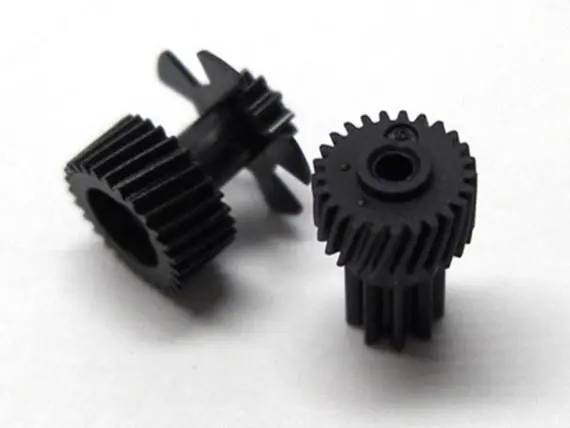
China Has an Edge When It Comes to Making Custom Injection Molds
Buildings for high-tech manufacturing
Manufacturing in China has advantages for making injection molds that you can't find anywhere else. There are state-of-the-art CNC machines, EDM gear, and accurate measuring tools in the country's advanced manufacturing plants. Major places for making things, like Guangdong Province, focus on mold-making techniques. This makes it easier for suppliers, material providers, and logistics networks to work together.
Spending less without giving up quality
Chinese manufacturers offer great value because they make the most of economies of scale and improve the way they make things. Making custom plastic injection molds stays cheap while still meeting high quality standards around the world. Workers aren't needed as much with modern automation, so quality stays the same even when a lot of products are being made at once. Companies can be even more cost-competitive without lowering performance standards when they have better ways to get materials.
New ideas and technical know-how
A lot of money is spent on research and development by big Chinese companies, which makes precision injection molds technology better. Engineers are used to working with complicated shapes, molds that have many holes in them, and materials that are hard to work with. Continuous improvement leads to faster cycle times, more accurate measurements, and a better finish on the surface.
Things You Should Think About When Picking a Manufacturer
Assessment of the Capacity for Production
Check out how good potential partners are at making things and how well they can handle growth. Suppliers that you can trust consistently handle a range of order volumes and stick to delivery dates. Production that can adapt to changing market needs or changes in the product while it is being made is very important.
Checking for Technical Know-How
Find out how good the manufacturers are at engineering and making custom molds. Take a look at their portfolio to see how they've been used in different fields, such as electronics, consumer goods, and cars. To be technically competent, you need to know how to use CAD software, do mold flow analysis, and design in a way that makes the product easy to make.
Systems for keeping track of quality
Check out the ways that quality is checked and the measuring tools that can be used. At every step of the mold-making process, professionals follow strict rules for inspection. Checking incoming materials, keeping an eye on work-in-progress, and using properly calibrated measuring tools to make sure the finished product is right are all parts of quality systems.
In charge of projects and communication
It's easier to finish projects and figure out problems when people can talk to each other well. Look at how the suppliers report progress, keep track of milestones, and deal with changes to see how well they can run projects. Having clear ways to talk to each other keeps everyone on the same page and makes sure that the project goals are met.
Taking care of intellectual property
It is still very important to protect intellectual property when sharing designs that are owned by others. Companies that want to keep their privacy strict use safe data management systems and follow strict privacy rules. You can show that they care about protecting your IP by giving them security certifications and non-disclosure agreements.
Here are some rules and approvals for quality in business.
To get a certificate in ISO quality management
The ISO 9001:2015 mark shows that you follow quality management rules and always try to do better. This standard will make sure that processes are always the same, that the customer comes first, and that there is a set way to manage quality. Businesses that have ISO certification tend to keep better records and have more control over their processes.
How to Meet Your Business's Compliance Needs
Auto suppliers must have IATF 16949 certification in order to make car parts that are injected. For their products to be used in hospitals, MedTech companies need plastic parts that meet ISO 13485 standards. People who use electronics in some ways may need to follow RoHS rules to keep the environment safe.
Rules for safety and the environment
Eco-friendly labels, like ISO 14001, show that a business makes good custom plastic injection molds. Anyone who has a safety certification knows how to follow the rules and keep the workplace safe. These rules show that the company values its workers and wants to stay in business for a long time.
What to look for and how to get it here
How to Make the Most of the Business-to-Business Market
On business-to-business (B2B) sites, you can get in touch with verified manufacturers who have full profiles that explain what they can do. People can talk to each other, look at suppliers, and make sure that deals are safe on these sites. The search engine has filters that you can use to find manufacturers that focus on certain uses or fields.
Going to trade shows
At trade shows in your field, you can meet possible suppliers in person and try out samples of their goods. At big trade shows, you can find many fresh tools and methods for creating things. The best way to talk about technical things and get to know someone is to meet in person.
Business is coming to you from networks in your field.
To find good suppliers, you can join groups and networks of people who work in the same field as you and share real-life performance experiences. If someone tells you about a supplier, you might not be able to tell from their ads how reliable, quick, and helpful they are.
How OEM and ODM Partnerships Work
Create ways for people to work together.
For OEM partnerships to work, designers must be able to work together easily and develop software in small steps. Manufacturers should give feedback on designs, suggestions for materials, and assessments of how well they can be made. Rapid prototyping molds shorten the time it takes to develop a product and speed up the validation of designs.
Chances to use value engineering
Value engineering uses the knowledge of experienced manufacturers to make designs that are the best in terms of cost and performance. This includes advice on choosing the right material, suggestions for making features simpler, and ideas for making the process run more smoothly. When people work together, they can make better products at lower costs.
Planning for Scalability
Plan for the ability to make more of the product from the prototype stage through mass production. Talk about how capacity is shared, how long lead times are needed, and how pricing works for volume breaks. A clear scalability roadmap keeps things from getting slowed down during the launch and growth phases of a product.
Negotiating the MOQ and finding the best prices
Pricing Structures Based on Volume
Figure out the different price levels for custom plastic injection molds based on the amount of production and make sure the costs are clearly broken down. Thermoplastic injection molds usually need a big down payment, so committing to a certain volume is important for lowering costs. Talk about flexible pricing structures that can adapt to changes in the market.
Ways to pay and handle risks
Set up fair payment terms that protect everyone's interests. Standard terms include paying part of the price up front for the mold, making payments as the mold is made, and then paying the full amount when the mold is approved. When doing business across borders, letter of credit agreements add extra security.
Thoughts on the Total Cost of Ownership
Look at the total costs, which should include the cost of the tools, the price per part, shipping, and any possible change costs. For long-term partnerships, think about the availability of mold maintenance services and how much they cost. When comparing suppliers, you should think about the costs that come with quality and the cost of doing work again.
Factory Audit and Quality Verification Methods
On-Site Facility Assessment
Conduct comprehensive factory audits to verify capabilities and quality systems. Evaluate equipment condition, facility organization, and employee training levels. Assess environmental controls, safety procedures, and waste management practices during facility visits.
Process Validation Procedures
Verify manufacturing processes through sample production runs and quality testing. Review statistical process control implementations and measurement system accuracy. Validate injection mold assembly procedures and final inspection protocols.
Supplier Performance Monitoring
Establish key performance indicators for ongoing supplier evaluation. Monitor delivery performance, quality metrics, and responsiveness to engineering changes. Regular performance reviews maintain high standards and identify improvement opportunities.
Conclusion
Selecting the right custom plastic injection molds manufacturer requires careful evaluation of technical capabilities, quality systems, and partnership potential. China's manufacturing ecosystem offers compelling advantages through advanced infrastructure, cost competitiveness, and technical expertise. Successful partnerships emerge from thorough supplier assessment, clear communication, and aligned objectives. Investment in proper supplier selection pays dividends through improved product quality, reduced costs, and accelerated time-to-market. The manufacturing landscape continues evolving with digital technologies and sustainability initiatives shaping future partnerships. Companies prioritizing comprehensive supplier evaluation and long-term relationship building position themselves for sustained success in competitive markets.
FAQ
Q: What factors determine custom injection mold pricing?
A: Pricing depends on mold complexity, cavity count, material requirements, tolerance specifications, and production volumes. Additional factors include surface finish requirements, automation level, and delivery timeline. Experienced manufacturers provide detailed quotations breaking down tooling costs and per-part pricing structures.
Q: How long does custom mold development typically take?
A: Development timelines vary from 4-12 weeks depending on complexity and manufacturer workload. Simple single-cavity molds require shorter timeframes, while complex multi-cavity tools need extended development periods. Clear project planning and regular communication help maintain realistic schedules.
Q: What information should I provide for accurate quotations?
A: Provide detailed drawings, material specifications, annual volume projections, and quality requirements. Include dimensional tolerances, surface finish expectations, and any special features. Complete information enables accurate cost estimation and proper project planning.
If you want high-quality custom plastic injection molds, work with Yongsheng.
You can trust Yongsheng to make your custom plastic injection molds because they have been making precise molds for over 20 years. Our Dongguan facility is ISO 9001:2015 certified and offers full one-stop services from the initial design consultation to the final production. We offer cost-effective solutions and guarantee on-time delivery to the electronics, automotive, and consumer goods industries. Our experienced engineering team can help you with plastic molding services and design optimization so that your project turns out well. We are in the famous "Town of Molds" in China, and we use advanced manufacturing techniques and strict IP protection protocols. Are you ready to turn your product ideas into products that can be sold? Email us at sales@alwinasia.com to talk about your custom injection molding needs and find out why top companies trust Yongsheng with their most important manufacturing tasks.
References
1. Plastics Industry Association. "Injection Molding Market Analysis and Trends Report." Annual Manufacturing Survey, 2024.
2. International Organization for Standardization. "Quality Management Systems Requirements for Automotive Production." ISO/TS 16949:2024.
3. Dongguan Hardware Machinery Mould Industry Association. "Manufacturing Excellence Standards in Precision Tooling." Industry Best Practices Guide, 2024.
4. China Plastics Processing Industry Association. "Sustainable Manufacturing Practices in Injection Molding." Environmental Impact Assessment, 2024.
5. Global Manufacturing Research Institute. "Digital Transformation in Injection Molding Industry." Technology Adoption Study, 2024.
6. Automotive Industry Action Group. "Supplier Quality Requirements for Plastic Components." AIAG Standards Manual, 2024.