Miniature Plastic Components for Micro-Assemblies
Today, tiny plastic components are what make micro-assembly manufacturing possible. They are used to make technology, medical devices, car systems, and marketable things that work perfectly. These tiny parts combine very precise measurements with the flexibility of modern plastics, which lets makers make patterns that are too complicated for metal ones to match. At Yongsheng, we've seen how these small but powerful plastic parts change the way products are made, giving our clients cost-effective options that don't sacrifice quality or performance. Understanding the capabilities and manufacturing details of tiny plastic parts becomes important to your buying success, whether you're making cutting-edge wearable tech or complex microfluidic systems.
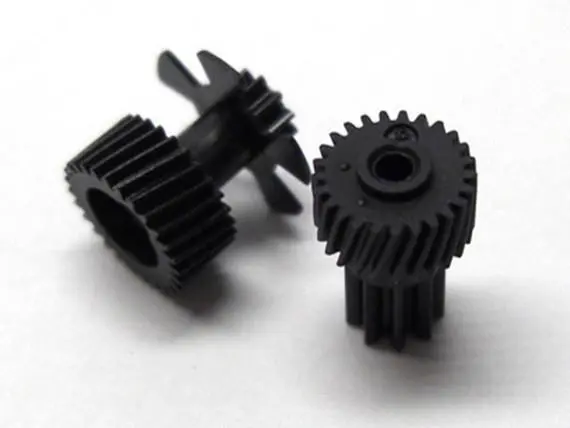
Understanding Miniature Plastic Components and Their Manufacturing Process
Miniature plastic components are precisely built parts made for micro-assemblies where exact measurements are very important. Even though these parts are usually only a few millimeters or even smaller, they have to stay within very tight limits in order to work properly in complex systems. The thirty years of experience we have had at Yongsheng have taught us that making micro-components well takes a deep understanding of material science and advanced production skills.
Material Selection for Micro-Scale Applications
Choosing the right materials is the first step in making a good tiny part. Modern thermoplastics like polycarbonate, polyether ether ketone (PEEK), and liquid crystal polymers (LCP) have amazing strength-to-weight ratios and stay the same size even when the temperature changes. Every day, we work with both engineering-grade resins made for electronics and vehicle uses and medical-grade plastics that meet biocompatibility standards. Thermoset materials are very resistant to chemicals, which makes them perfect for tough work settings. When normal plastics don't meet performance needs, composite materials with carbon or glass fibers can provide better dynamic qualities. The features of the material directly affect the performance of the component. When purchasing small plastic parts, purchasing managers should look at their temperature resistance ranges, how well they resist chemicals, how well they insulate electricity, and how stable their dimensions will be over time. These things determine whether a part will work regularly for as long as it's supposed to.
Precision Manufacturing Techniques
To make tiny plastic parts, you need to use special techniques that are very different from regular injection molding. The most common method is micro-injection molding, which uses very small shot sizes that are counted in milligrams instead of grams. To keep the parts so small from having flaws, this method needs very exact control over the melt temperature, injection speed, and cooling cycles. To meet the high standards of our foreign clients, we keep tight process controls at our Dongguan plant so that errors are kept within ±0.01mm. Micro-injection molding is just one of several technologies that help make tiny parts. CNC cutting is very accurate for samples and small production runs, so you can test your idea before you spend a lot of money on tools. Additive manufacturing technologies, especially micro-stereolithography, make it possible to make quick prototypes of complicated shapes that are hard to make with standard methods. Each way of making something has its own benefits, and choosing the right one relies on the shape of the part, the amount that needs to be made, the materials that are needed, and your budget.
Quality Control and Certification Standards
Tough quality control tells the difference between tiny parts that work and ones that break when they're put together. We've had ISO 9001:2015 certification at Yongsheng since the beginning, and it's what we use for uniform quality control. Using coordinate measuring tools (CMM) and optical comparators for size checking makes sure that all of the important dimensions are met. Statistical process control checks the stability of production and finds changes before they cause faulty parts to reach customers. Certifications specific to the industry add another level of security. Medical device makers need to make sure that their parts are compliant with ISO 13485, which sets strict standards for cleanliness and tracking. Automotive suppliers often ask for IATF 16949 approval to make sure plastic components can handle the rough conditions that cars face. Knowing these licensing needs early on in the buying process keeps delays from being expensive and makes sure that regulations are followed.
Benefits and Applications of Miniature Plastic Components in Micro-Assemblies
The advantages of miniature plastic components extend far beyond their diminutive size. We've helped countless clients transition from metal micro-components to plastic alternatives, unlocking benefits that directly impact their bottom line and product performance. Understanding these advantages helps procurement professionals make informed material selection decisions aligned with their project objectives.
Core Performance Advantages
The fact that plastic is lightweight is one of the best reasons to use it for small parts. Plastic parts usually weigh 50–70% less than metal parts that do the same job, which helps lower the total weight of the product. This trait is especially useful in situations where weight is important, like in small tools, personal tech, and cars. The reduced weight directly leads to longer battery life for electronics and better gas mileage for cars. Resistance to corrosion is another important benefit. When metals are exposed to water, chemicals, or natural pollutants, they rust or degrade. But industrial plastics keep their traits forever in these situations. We have given parts for boat electronics and outdoor gear that are still working perfectly after years of being in tough conditions that would have broken metal parts. This sturdiness makes products last longer and cuts down on guarantee claims. Cost-effectiveness comes from a number of sources. Plastics usually cost less than special metals or alloys, which lowers the cost of raw materials. The production processes, especially high-volume injection casting, can make things faster than the metal construction methods. Metal parts with complicated shapes that need to be machined in several steps can often be made as a single plastic piece, which cuts down on the number of steps needed to put the part together and the cost of work. When production rates go above 10,000 units per year, these economic benefits become even more noticeable. Design freedom allows for unique options that metal manufacturing can't match. With injection molding, you can make a single part with complicated features like undercuts, thin walls, integrated snap fits, and designs with more than one hole. This design freedom lets products get smaller while still doing their job. We've made parts with wall widths below 0.3mm and features measuring only tenths of a millimeter, which has allowed our clients to make goods that would not have been possible with standard ways of production.
Industry-Specific Applications
Small plastic parts are used a lot in medical gadgets and microfluidic systems. To get accurate test results, diagnostic equipment needs flow channels, valve seats, and sensor housings that are very precise and stay the same size. Biocompatible materials that won't cause bad effects are needed for implantable devices. Microfluidic chips used in lab tests have paths that are micrometers wide and are used to move tiny amounts of fluid through complicated routes. Medical-grade plastics are essential in healthcare because they can withstand chemicals and are compatible with cleaning. Electronics making uses a huge amount of small plastic parts. There are a lot of small plastic parts in smartphone systems that act as gaps, insulation, light guides, and structural supports. Electrical connections are placed with accuracy measured in hundredths of millimeters by the connector housings. Camera units have plastic lens tubes and shutter systems that need to work smoothly for millions of rounds. Plastics' electrical insulation qualities keep short circuits from happening, and their physical stability makes sure that links stay strong for the life of the device. Automotive micro-components support the industry's ongoing trends toward downsizing and electrification. Sensor housings keep sensitive electronics safe from dirt, shaking, and changes in temperature. The chemicals in current biofuel mixes don't hurt the parts of the fuel system. Interior trim pieces protect the shape of the structure and make it look nice in temperatures ranging from -40°C to +85°C. As more computer systems are added to cars, the need for precise plastic micro-components keeps growing. Wearable technologies have their own problems that can be solved by small plastic parts. Fitness trackers, smartphones, and medical tracking gadgets need parts that can handle sweat, makeup, and being cleaned over and over again while still feeling good against the skin. Plastics are light, which makes them easier to wear for long periods of time without getting tired. Optical clarity lets screens and devices work together. We've made special parts for smart tech that meet the needs for reliability while also meeting the needs for good looks.
How to Choose the Right Miniature Plastic Components for Your Assembly Needs
To choose the best tiny plastic parts, you need a methodical approach that weighs technical needs against practical concerns. As we've worked with foreign procurement managers for years, we've seen that an organized decision-making strategy is key to choosing the right parts. This method lowers the risk while making sure that the parts give your application the speed it needs.
Evaluating Application-Specific Requirements
Understanding how your assembly will be used is the first step in choosing the plastic components. Material choices are based on temperature ranges because different plastics keep their qualities over a wide range of temperature windows. When temperatures drop below 0°C, you need materials that won't break easily, and when temperatures rise, you need heat-resistant plastics that won't soften or bend. Chemical exposure also limits the materials that can be used, since some plastics break down quickly in solvents, acids, or oils, while others can withstand these substances forever. Mechanical loading conditions affect both the choice of materials and the design features that go into them. Parts that are constantly under stress need materials that don't creep and keep their shape under long-term loads. When systems are subjected to shock or shaking, impact protection becomes very important. When parts have moving or spinning surfaces, wear resistance is important. We work closely with clients to understand these usage scenarios and suggest materials and design features that will ensure long-term reliability. It is important to remember that regulatory compliance standards must be met. For medical uses, you need either USP Class VI biocompatibility or ISO 10993 approval. Materials used in food contact uses must be FDA-approved. Electronics that are going to be sold in Europe have to follow the RoHS rules on dangerous substances. Finding these needs early on keeps expensive changes from having to be made late in the development process.
Assessing Material Properties and Performance Metrics
Material property data sheets have useful information, but they need to be interpreted by someone who knows what they're talking about. Tensile strength shows how much weight something can hold, but flexural modulus is more important for small parts that are mostly stressed in a bent direction. If you test impact strength at room temperature, it may be very different from how well it works when the temperature changes that your application is exposed to. We help our customers figure out which qualities are most important for their application, rather than being focused on big numbers that don't have any effect on how well the product works in real life. The level of precision needed for making directly impacts the choice of method and cost. Tolerances smaller than ±0.05mm usually need extra cutting steps or more expensive tools, which raises the cost of the part. The most efficient way to make something is to know which measurements really need tight control and which ones can handle bigger limits. We've saved clients a lot of money by finding measurements that could be loosened without affecting the function of the assembly. Scalability factors affect the long-term success of a component. Making prototypes is often done in a way that is different from making large quantities. Making sure that the material and style you choose will work well from testing to mass production will save you a lot of money on redesigns. The cost-effectiveness of a production method depends on how many units are being made. For example, CNC cutting is best for making hundreds of parts, but injection molding is better for making more than a few thousand units.
Validating Supplier Capabilities and Certifications
Choosing a supplier has effects that go beyond the cost of the initial parts. Tolerances, surface finishing, and output regularity can all be affected by how well a machine can make things. Precision micro-molding suppliers bring skills and tools that general-purpose molders don't have. At Yongsheng, some of our 300 workers are engineers who have spent decades fixing downsizing problems. They bring problem-solving skills that stop problems before they happen. Certification compliance is an objective check of quality systems and technical abilities. Getting ISO 9001:2015 approval shows that you follow the rules for quality management. Industry-specific certificates, such as ISO 13485 for medical equipment or IATF 16949 for car use, show that providers know how to meet the needs of that field. When sharing private designs, intellectual property security policies are very important. We follow strict secrecy rules to protect our clients' ideas throughout the manufacturing relationship. Lead times and logistics costs are affected by geography. Suppliers who are close to important shipping ports cut down on the time and money needed for delivery. Aligning time zones makes it easier to communicate in real time during the production process. Our site in Dongguan is close to Shenzhen Airport, which makes it easy for foreign clients to get prototypes quickly and manage production supplies. When figuring out the total cost of ownership, these useful factors often take precedence over small price differences.
Innovations and Future Trends in Miniature Plastic Components
Technology improvements and changing market needs are keeping the world of tiny component manufacturing changing quickly. Keeping up with these trends helps procurement pros predict what will be possible and stay ahead of the competition. Because we serve a wide range of foreign markets, we have a unique view of new trends that are changing the business.
Advanced Manufacturing Technologies
Micro-injection molding technologies keep getting better, making it possible to make features smaller and more precise. Modern tools can make surfaces with molecular finishing and place features with micron-level accuracy. Multi-component molding technologies let you mix different materials into a single part, so you can make parts with different colors, hardnesses, or functions all in one molding cycle. These features make it easier to put things together and give designers more options. Automation and robots change the way quality control and dealing are done. Machine vision systems check all of a product's parts at speeds faster than humans can, finding differences in size or flaws on the surface that a person might miss. Robotic handling keeps fragile micro-components from getting dirty or broken while they are being processed. These technologies make things more consistent while lowering the cost of work. This makes high-precision parts more accessible.
Smart Materials and Functional Integration
New discoveries in material science give plastic parts skills that weren't possible before. Conductive plastics make it possible for electrical functions or safety against electrostatic discharge to be built into injection-molded parts. Shape-memory plastics can change their shape when heated or cooled, which lets them be used in new ways. Self-lubricating materials lower friction without using outside oils, which makes upkeep easier. These functional materials blur the lines between plastics and other types of materials. Adding extra functions directly to made parts makes them easier to put together. In-mold decoration puts images while the mold is being made, so there is no need to paint or mark. Insert molding puts electrical or metal parts inside plastic bodies, making mixed products in a single step of the production process. With these methods of integration, the number of parts and assembly work is cut down, and dependability is increased by getting rid of possible link problems.
Sustainability and Environmental Considerations
Environmental awareness is having a bigger effect on the choices we make about materials and how they are made. Bio-based polymers made from green feedstocks work just as well as plastics made from oil, but they leave smaller carbon impacts. Recycled plastic products have qualities that are similar to those of new materials, which supports efforts to create a circular economy. We've helped clients switch to sustainable materials without affecting the performance of their parts, so they can meet their environmental obligations while keeping quality standards high. Improving the manufacturing process has an even bigger effect on the environment than choosing the right materials. Molding equipment that is energy-efficient uses less power. Closed-loop cooling methods use as little water as possible. Efforts to cut down on waste through improved runner systems and regrind processes increase the use of less material. These changes help companies meet their environmental goals and often lower the cost of making things at the same time.
How to Source and Procure Miniature Plastic Components Effectively
Effective procurement of miniature plastic components requires balancing technical specifications against commercial considerations. Our decades of serving international procurement managers have revealed common pitfalls and best practices that significantly impact project outcomes. Understanding these factors helps buyers navigate the sourcing process confidently.
Identifying Qualified Manufacturing Partners
Expertise in accurate micro-molding from suppliers sets capable makers apart from those who aren't ready for the challenges of downsizing. Before deciding to work with someone, you should find out what professional skills they have, what tools they have, and how much experience they have with similar projects. Manufacturers who specialize in your field can help you avoid common design mistakes by giving you useful application knowledge. We've put a lot of money into micro-molding equipment and trained our engineering team in shrinking methods, which lets us help clients with their development problems quickly. Production capacity and scale show whether providers can support your growth. For prototype numbers, you may only need a small amount of production capacity, but for business quantities, you will need a lot of it. If you know how a provider is currently being used and how they can grow, you can avoid supply problems as your needs grow. Our 6,000-square-meter building has several production rooms, which lets us increase output while still meeting shipping dates.
Understanding Pricing Structures and Cost Drivers
The price of a miniature component is based on more than just the cost of the materials used. Tooling purchases for micro-injection molds are high up-front costs that can be anywhere from a few thousand dollars to tens of thousands of dollars, based on how complicated the cast is. Because these costs are spread out over a larger amount of production, the cost per unit goes down a lot as the quantity produced goes up. We give clear breakdowns of prices so that clients can understand how costs work and make smart promises about volume. Minimum order quantities (MOQ) vary a lot between providers and manufacturing methods. Minimum order quantities (MOQs) for custom injection-molded parts are usually measured in thousands of units. This is because of the time and materials needed for setup. As few as 10 to 100 CNC-machined samples may be needed to meet the MOQ. By knowing these levels, you can make sure that your purchasing plans match up with your real production needs, so you don't end up with too much inventory or paying too much for small amounts. Volume savings reward larger pledges by lowering the cost per unit. Price drops usually happen at certain levels where manufacturing becomes more efficient or where buying materials becomes cheaper. It's often easier to get better prices when you negotiate yearly number agreements instead of individual purchase orders. Working together with our clients, we set up deals that save them money while still allowing for changes in demand.
Managing Lead Times and Development Cycles
Lead times for unique plastic components are very different depending on the stage of development and the method used for production. CNC cutting may only take one to two weeks to make the first sample, while injection mold making usually takes four to eight weeks, based on how complicated the cast is. After the casting is finished, production wait times for regular orders are usually between 2 and 4 weeks. Knowing these deadlines when planning a project keeps you from having to deal with schedule issues and hasty choices that hurt quality. Design help and tech teamwork speed up development while making results better. Suppliers that offer design for manufacturability (DFM) research find problems that might come up with production before they make the tools. Prototyping services make sure that plans work before spending a lot of money on production tools. Our engineering team at Yongsheng actively looks over client designs and suggests changes that make them easier to make, cheaper, or better at what they do based on our many years of production experience. Communication rules have a big effect on the success of a project, especially when working with suppliers from other countries. Setting clear points of contact, preferred methods of communication, and response time standards helps keep everyone on the same page. During the tooling and beginning production stages, stakeholders are kept up to date on progress by regular reports. We give each client their own project manager to make sure there is consistent contact and quick problem-solving throughout the partnership.
Conclusion
Micro-assemblies need to be precise, reliable, and cost-effective, and miniature plastic components are key technologies that make that possible in many fields. To be good at buying, you need to know about the qualities of materials, how they are made, and the needs of the application, while also working with experienced manufacturing partners such as Yongsheng that can provide specialized knowledge and production skills. As new materials, industrial technologies, and concerns about the environment change, they create both possibilities and challenges for procurement professionals who must make informed decisions about component selection. Companies can identify high-performance miniature parts that meet budget and delivery targets by applying structured evaluation systems and collaborating closely with proven suppliers; for technical consultation or sourcing support, inquiries can be directed to sales@alwinasia.com. Spending time and resources on careful supplier screening and cooperative design development ultimately leads to shorter development cycles, lower costs, and higher overall product quality.
FAQ
What materials work best for medical-grade miniature plastic components?
Medical-grade miniature components typically utilize polymers meeting USP Class VI biocompatibility standards or ISO 10993 certification. Common materials include medical-grade polycarbonate, PEEK, polypropylene, and specialized liquid silicone rubbers. Material selection depends on application specifics, including sterilization method compatibility (autoclave, gamma radiation, ethylene oxide), chemical exposure to bodily fluids or medications, and mechanical requirements. We maintain material certifications and traceability documentation required for medical device applications, ensuring regulatory compliance throughout the supply chain.
How does micro-injection molding differ from traditional injection molding?
Micro-injection molding employs specialized equipment designed for extremely small shot sizes, often measured in milligrams rather than grams. The process requires precise control over injection speed, pressure, and cooling to fill tiny cavities before the material solidifies. Tooling incorporates venting strategies, managing air evacuation from microscopic features. Surface finish requirements demand higher polish levels than standard molds. Cycle times are often shorter, but setup and process optimization require greater expertise. These differences make micro-molding a distinct specialization rather than simply scaled-down conventional molding.
What environmental advantages do plastic miniature components offer compared to metal alternatives?
Plastic components typically require less energy to manufacture than metal alternatives, as processing temperatures are significantly lower. The lightweight nature reduces transportation fuel consumption throughout the supply chain. Modern engineering plastics offer longevity matching or exceeding metals in many applications, eliminating the performance trade-off perception. Recyclable thermoplastics support circular economy initiatives when collection infrastructure exists. Bio-based polymers further reduce environmental impact by utilizing renewable feedstocks. However, end-of-life disposal remains a consideration, making recyclability and material selection important factors in comprehensive environmental assessments.
What tolerances can realistically be achieved in miniature plastic components?
Achievable tolerances depend on component size, geometry, and manufacturing method. Micro-injection molding typically achieves ±0.02mm to ±0.05mm on critical dimensions, with tighter tolerances possible through secondary machining operations. CNC machining can achieve ±0.01mm or tighter, but at higher costs. Material selection influences dimensional stability, as different polymers exhibit varying shrinkage rates and thermal expansion coefficients. We work with clients to identify which dimensions require tight control versus those acceptable with wider tolerances, optimizing manufacturing efficiency and costs.
References
1. Giboz, J., Copponnex, T., & Mélé, P. (2007). Microinjection molding of thermoplastic polymers: A review. Journal of Micromechanics and Microengineering, 17(6), R96–R109.
2. Tosello, G., Gava, A., Hansen, H. N., & Lucchetta, G. (2010). Influence of process parameters on the micro injection molding of polymer micro features. International Journal of Advanced Manufacturing Technology, 47, 81–97.
3. Goodship, V. (2017). Practical Guide to Injection Moulding (3rd ed.). Smithers Rapra Technology.
4. Osswald, T. A., Turng, L. S., & Gramann, P. J. (2018). Injection Molding Handbook (2nd ed.). Hanser Publishers.
5. Kurtz, S. M. (2012). PEEK Biomaterials Handbook. William Andrew Publishing.
6. Whitesides, G. M. (2006). The origins and the future of microfluidics. Nature, 442(7101), 368–373.

We can provide a one-stop service, including design and development, mold fabrication, production, product processing, etc.

Professional injection mold, die casting mold, plastic products OEM manufacturer


