The quality of the product, the cost of making it, and the time it takes to get it to market are all affected by the choice between injection mold and blow mold technologies. For making solid, difficult plastic parts with exact measurements, injection molding is the way to go. Blow molding, on the other hand, is great for making flat bottles and containers. What you choose will depend on what your product needs, how much you plan to buy, and your price. It is easier for buying managers to make decisions that help their factories reach their goals when they know these basic differences.
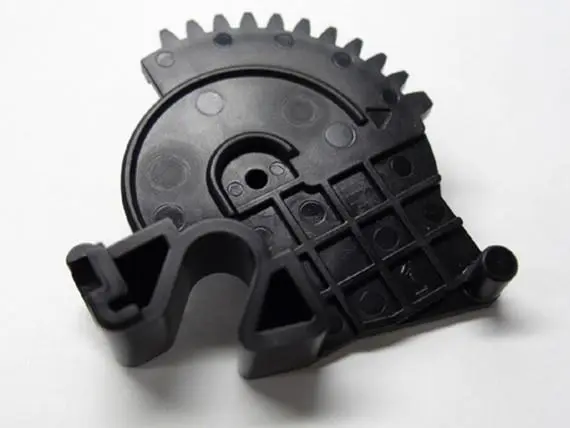
Understanding the Core Differences Between Injection and Blow Molding
The injection molding process fundamentally differs from blow molding in three critical aspects that directly affect your manufacturing decisions:
1. Flow of Material and Formation of Parts: Injection molding uses high pressure to push molten thermoplastic material into a mold hole. This makes solid parts with fine details. Test results show that injection pressures can be anywhere from 15,000 to 30,000 PSI, which lets wall thickness changes be as accurate as 0.002 inches.
2. Product Geometry Capabilities: Blow molding inflates heated plastic parison inside a mold cavity, forming hollow products exclusively. Industry studies indicate blow molding achieves wall thickness uniformity within ±15%, while injection molding maintains ±5% consistency across complex geometries.
3. Cycle Time Performance: Injection molding cycles typically range from 10-60 seconds depending on part complexity, while blow molding cycles span 20-120 seconds due to cooling requirements for larger hollow volumes.
Injection mold technology works better when you need strong parts with lots of different features. If you need containers or bottles that are hollow, blow mold methods work better.
Injection Molding: Advantages and Application Scenarios
Plastic injection molding dominates manufacturing sectors requiring precision, complexity, and high-volume production capabilities. The process delivers exceptional versatility for diverse industry applications.
Key Advantages:
- Superior dimensional accuracy: ±0.003 inches tolerance achievable
- Complex geometry capabilities including undercuts, threads, and inserts
- Excellent surface finish quality requiring minimal secondary processing
- High production rates: up to 1,000+ parts per hour possible
- Wide material compatibility including engineering thermoplastics
Optimal Application Scenarios:
Injection mold tooling is useful for electronics companies that make housings, links, and internal parts. Automakers use this technology for parts of the dashboard, the interior trim, and the parts under the hood that need to be resistant to heat.
Consumer goods brands choose injection molding for appliance components, toys, and household items needing durability. The injection molding process excels in creating parts with integrated features like snap-fits, living hinges, and precise mounting points.
Injection molding technology is the best way to make things with tight tolerances and complicated shapes. Adding the hot runner system makes things even more efficient by cutting down on waste and running times.
Blow Molding: Strengths and Ideal Use Cases
Blow molding technology specializes in hollow product manufacturing, offering unique advantages for container and packaging applications across multiple industries.
Primary Strengths:
- Cost-effective hollow part production with uniform wall distribution
- Seamless construction eliminating leak points and weak joints
- Excellent for large volume container manufacturing
- Lower tooling costs compared to equivalent injection mold solutions
- Suitable for products requiring lightweight yet strong construction
Perfect Application Areas:
Beverage industry relies on blow molding for bottles, containers, and packaging solutions. Automotive sector utilizes this process for fuel tanks, air ducts, and fluid reservoirs requiring leak-proof performance.
Chemical manufacturers choose blow molding for storage containers, drums, and industrial packaging. The process creates products with excellent chemical resistance and impact strength characteristics.
If you need hollow containers with consistent wall thickness, blow molding delivers superior performance. The technology proves particularly valuable when product volume requirements exceed container complexity needs.
Cost Analysis: Investment and Production Economics
Understanding the financial implications of mold design choices significantly impacts your project's profitability and long-term success.
Initial Tooling Investment Comparison:
| Factor | Injection Molding | Blow Molding |
|---|---|---|
| Tooling Cost Range | $5,000 - $100,000+ | $2,000 - $50,000 |
| Lead Time | 4-12 weeks | 2-8 weeks |
| Complexity Handling | Very High | Limited |
| Material Utilization | 95-98% | 85-90% |
Production Cost Factors:
Injection molding machines require higher initial investment but deliver lower per-part costs at high volumes. Industry data shows break-even points typically occur around 10,000-50,000 parts depending on complexity.
Because of better utilization rates and less waste, material prices favor injection molding. When compared to blow molding, the efficiency of the mold cooling system in injection methods cuts the amount of energy used per part by about 15 to 25 percent.
Blow molding is easier to get into if you need to make prototypes and small batches of products at a low cost. Injection mold technology is more cost-effective in the long run if you need to make a lot of things with complicated features.
Quality and Performance Considerations
Product quality requirements often determine the most suitable manufacturing approach for your specific application needs.
Dimensional Accuracy Performance:
Injection molding technology achieves superior dimensional control through precise injection molding parameters. Typical tolerances range from ±0.002 to ±0.005 inches for most applications, with specialized processes reaching ±0.001 inches.
Blow molding delivers adequate accuracy for container applications, typically maintaining ±0.010 to ±0.030 inches depending on part size and geometry complexity.
Surface Quality and Finish Options:
The injection molding process enables superior surface finish control through advanced mold cavity treatments. Texture options range from high-gloss mirror finish to complex grain patterns, eliminating most secondary operations.
Blow molding produces acceptable surface quality for most container applications but offers limited texture and finish customization options.
Structural Integrity Analysis:
The material qualities of injection-molded parts are the same across the whole cross-section. The stress distribution stays the same, so the mechanical performance can be predicted even when the loads are changed.
Blow molded products demonstrate excellent impact resistance and flexibility, particularly valuable for containers requiring drop-test compliance and shipping durability.
If you need parts requiring precise dimensions and superior finish quality, injection molding delivers unmatched performance. If you need containers with excellent impact resistance and flexibility, blow molding technology proves more suitable.
Timeline and Production Efficiency Factors
Project timelines significantly influence manufacturing method selection, especially for companies requiring rapid market entry or seasonal production demands.
Development and Setup Timeline:
Injection mold development typically requires 6-16 weeks depending on complexity and feature requirements. The mold design phase alone consumes 2-4 weeks for thorough engineering analysis and optimization.
Blow mold development generally completes within 3-10 weeks due to simpler tooling requirements and reduced complexity factors.
Production Scalability:
Injection molding automation enables rapid scaling from prototype quantities to millions of parts annually. Modern injection molding machines support lights-out operation with minimal supervision requirements.
The injection molding cycle optimization through scientific molding principles reduces cycle times by 10-30% while maintaining quality consistency.
Blow molding scaling depends heavily on container size and complexity. Large containers may limit automation options, affecting overall throughput capabilities.
If you need rapid scaling with minimal labor requirements, injection molding technology provides superior automation potential. If you need faster initial setup for container production, blow molding offers quicker market entry.
Material Selection and Compatibility
Material choice significantly impacts both process selection and final product performance across diverse application requirements.
Injection Molding Material Range:
Thermoplastic injection supports virtually all thermoplastic materials including engineering grades like PEEK, PEI, and PPS. Processing temperatures range from 350°F to 750°F, accommodating materials with diverse thermal requirements.
Advanced injection mold materials enable processing of filled compounds, glass-reinforced plastics, and specialized formulations for specific industry applications.
Blow Molding Material Options:
Blow molding primarily utilizes HDPE, PP, PET, and other container-grade materials optimized for hollow part formation. Material selection focuses on melt strength and processability rather than mechanical property diversity.
Processing Compatibility Analysis:
The injection molding industry continues expanding material compatibility through advanced processing techniques and equipment upgrades. New materials regularly receive qualification for injection processing applications.
Blow molding material development concentrates on barrier properties, clarity, and container-specific performance characteristics.
If you need access to the broadest material selection including engineering thermoplastics, injection molding provides unmatched options. If you need specialized container materials with excellent barrier properties, blow molding offers optimized solutions.
Conclusion
Before choosing between the injection mold and blow mold methods, you should think about what you need to make, how much you want to make, the quality standards, and your budget. It is possible to make solid, complex parts that are the right size and have a smooth surface by injection molding. Cheap, strong hollow things can be made with a method called "blow casting."
You might want to look into injection molding if your projects need to be made in large quantities, have complicated shapes, or need a wide range of materials. You should use blow molding for hollow containers, packing, or jobs that don't need a lot of expensive tools up front.
Working with seasoned makers like Yongsheng guarantees that you will get expert advice throughout the decision-making process, ensuring that you get the best technical performance and business success for your unique application needs.
Partner with Yongsheng for Expert Injection Mold Manufacturing Solutions
Yongsheng delivers comprehensive injection mold manufacturing expertise backed by over three decades of industry experience and proven results for international clients. Our Dongguan facility combines advanced injection molding technology with stringent quality control processes, ensuring your projects meet exact specifications and delivery requirements.
As a trusted injection mold supplier, we provide complete one-stop OEM services from initial mold design through final production and secondary processing. Our experienced engineering team optimizes injection mold tooling for maximum efficiency, cost-effectiveness, and long-term reliability across diverse applications.
Our 6,000 square meter facility houses over 300 skilled professionals dedicated to delivering exceptional results for electronics, automotive, consumer goods, and hardware industries. We understand procurement managers require reliable partners who consistently deliver on-time, within budget, and to specification.
Ready to discuss your injection molding requirements with our experienced team? Contact us at sales@alwinasia.com to schedule a consultation and discover how Yongsheng's injection mold expertise can optimize your manufacturing success.
References
1. Rosato, D.V., Rosato, M.G. "Injection Molding Handbook: The Complete Molding Operation Technology, Performance, Economics." Chapman & Hall Industrial Manufacturing Series, 3rd Edition.
2. Crawford, R.J., Throne, J.L. "Rotational Molding Technology: Processing, Materials, and Applications." William Andrew Publishing Materials Engineering Series.
3. Kazmer, D.O. "Injection Mold Design Engineering." Carl Hanser Verlag Professional Engineering Publications, 2nd Edition.
4. Lee, N.C. "Understanding Blow Molding: Processing Fundamentals and Design Guidelines." Hanser Gardner Publications Manufacturing Technology Series.
5. Rees, H. "Mold Engineering: Design and Application of Plastics Processing Tools." Hanser Gardner Publications Industrial Engineering Series, 2nd Edition.
6. Malloy, R.A. "Plastic Part Design for Injection Molding: An Introduction for Design Engineers." Hanser Gardner Publications Product Development Series.